The ReverseGPT Team·September 26, 2026·10 min read
Frequently asked questions
What does it mean to humanize text?
To humanize text is to revise it so it reflects deliberate choices in reasoning, details, pacing, and point of view. The finished writing should be something the writer can explain and defend.
How can I make a draft sound less generic?
Replace broad claims with relevant facts, examples, observations, or direct explanations. Cut generic openings and filler transitions that do not move the reasoning forward.
How do I preserve meaning while revising text?
Keep factual claims, technical terms, qualifications, citations, and the relationship between evidence and conclusions under review. Compare the revision with the original section by section to check that the main point and level of certainty remain intact.
Can a rewriting tool replace editing?
No. A rewriting tool can offer a starting revision or help identify stiff wording and repetitive structure, but the writer must review voice, accuracy, source support, and audience fit.
Why should I read a draft aloud?
Reading aloud can reveal repeated phrasing, buried subjects, sentences that lose direction, and transitions that do not connect. Mark where you lose the thread, then revise for meaning before style.
A draft can be grammatically clean and still sound unlike anyone. To humanize text, you need more than new synonyms. You need to make the reasoning, details, and voice answerable to the person whose name is on the work.
What It Means to Humanize Text
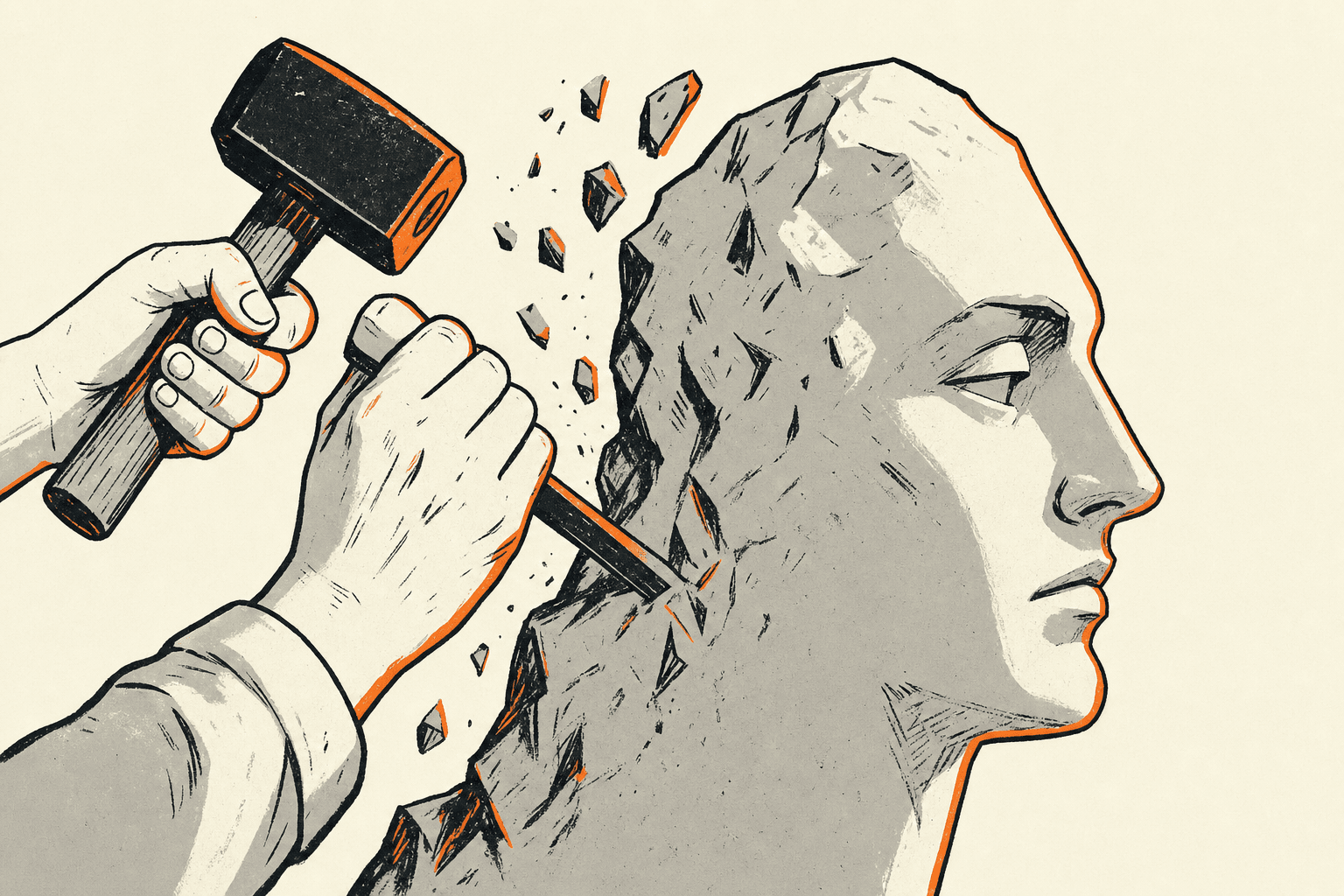
To humanize text is to revise it until it sounds like a person making deliberate choices, not a draft assembling familiar phrases.
Natural writing has a point of view. It uses details that matter to the subject. It moves at a pace that fits the reader. It makes claims at the level of certainty the evidence supports.
That is different from changing words for their nearest synonyms. A sentence does not become clearer because “important” becomes “crucial,” or because “use” becomes “utilize.” Random substitutions often make prose stiffer. They can also change the meaning without improving the thought.
When you revise AI-generated text, look for four things:
Specificity: Replace broad statements with relevant facts, examples, or observations.
Rhythm: Mix short and longer sentences when that helps a reader follow the idea.
Clarity: Say what caused something, what changed, or why the point matters.
Point of view: Make your position visible where the assignment or document calls for it.
A useful revision does not hide where a draft began. It makes the finished writing something you can explain and defend.
You remain responsible for the ideas in the document. You are responsible for every factual claim, every source, every citation, and the final wording. A tool can suggest a phrasing. It cannot know whether that phrasing accurately represents your experience, your evidence, or your intent.
Signs a Draft Needs More Human Revision
A draft needs more human revision when it sounds polished but does not say much.
Generic openings are a common sign. Phrases such as “In recent years” or “It is important to note” delay the actual point. They make a paragraph sound formal without giving the reader a reason to continue.
Repeated sentence patterns create another problem. A sequence of sentences that all begin with the same kind of claim can feel mechanical:
“This issue is important because…”
“This topic is significant because…”
“This matter should be considered because…”
The repetition is not only stylistic. It usually signals that the reasoning has not moved forward.
Watch for vague claims, too. “Technology has changed society” may be true in a broad sense, but it does not tell a reader what technology, which part of society, or what kind of change you mean. Stronger writing names the subject and explains the connection.
Filler transitions often reveal the same weakness. “Moreover,” “furthermore,” and “in conclusion” are useful only when they describe a real relationship between ideas. If removing one changes nothing, cut it.
Unsupported confidence is the most serious warning sign. A draft may state that a policy “will improve outcomes” or that an approach “proves” a conclusion when the source only suggests a possible effect. Keep qualifiers when the evidence requires them. Words such as “may,” “often,” and “in this case” are not weaknesses when they are accurate.
Before
Remote work has changed the workplace in many ways. It is important for companies to understand these changes because they can affect productivity and employee satisfaction.
After
Remote work changes how teams share information, supervise new employees, and separate work from home life. A company reviewing its policy should examine those practical effects instead of treating productivity as the only measure.
The revised version adds context and gives the reader a clearer line of reasoning. It does not claim more than the original can support.
Overly polished prose can also lose your perspective. If every sentence could belong in any article on the topic, the draft has probably avoided the real work: deciding what you think, what evidence supports it, and what your reader needs to understand.
A Practical Workflow to Humanize Text
The practical way to humanize text is to revise in passes, with a different job for each pass.
Start with audience, purpose, and position
Before changing a sentence, identify who will read the piece and what it needs to do.
An email to a colleague should be direct and easy to act on. A blog post may need a stronger opening and concrete examples. An academic draft needs careful definitions, evidence, and citation support. A professional document may need restrained language and a clear recommendation.
Then state your actual position in plain language. Write it as a note to yourself if necessary:
What am I arguing?
What do I know directly?
Which points come from a source?
What does the reader need to decide or understand?
If you cannot answer those questions, wording is not the main problem. The draft needs clearer thinking first.
Check claims before polishing them
Read every claim and ask whether you can support it. This is the central habit of responsible AI writing.
Separate statements into categories:
Facts that need a reliable source.
Interpretations that need reasoning.
Personal observations that should be clearly framed as your own.
Predictions or recommendations that need appropriate limits.
Do not polish an unsupported claim into a more persuasive sentence. Find evidence, narrow the claim, add a qualifier, or remove it.
Replace general language with useful detail
Generic passages often become stronger when you add the detail that made you include them in the first place.
Instead of writing, “The meeting was ineffective,” explain what happened: decisions were deferred, the agenda was unclear, or the discussion ended without assigning work. Instead of writing, “The article makes a strong argument,” name the argument and explain why the evidence supports it.
This does not mean adding decorative detail. Keep details that help the reader understand the point.
Vary structure for readability
Sentence variety matters when it improves comprehension.
Use a short sentence after a dense explanation. Combine two choppy sentences when they express one idea. Move the important information toward the start of a sentence when readers need to find it quickly.
Do not vary language merely to make a draft look less patterned. A clear repeated term is often better than a parade of imprecise alternatives.
Read aloud, then make a final style pass
Reading aloud exposes problems that silent reading lets through. You will hear repeated phrases, buried subjects, long sentences that lose their direction, and transitions that do not connect.
Read one paragraph at a time. Mark the exact word where you lose the thread or run out of breath. Then revise that sentence for meaning before you revise it for style.
Finish with a grammar and style pass. Check punctuation, spelling, formatting, headings, and consistency in terms and tone. Grammar matters, but grammar alone does not make writing sound natural. Clear thinking does.
How to Keep the Original Meaning Intact
Keep the original meaning intact by changing expression without casually changing claims or reasoning.
A wording change adjusts how an idea is stated. A meaning change alters what the draft says is true, likely, important, or caused by something else. The distinction matters most in research-based, technical, and professional writing.
Preserve the parts of a draft that carry factual weight:
Names, dates, and titles.
Technical terms and defined concepts.
Quantities and measurements.
Qualifications and limits.
Citations and source attributions.
The relationship between evidence and conclusion.
For example, “may reduce delays” is not the same as “reduces delays.” The revision removes uncertainty and makes a stronger claim. Likewise, “participants reported” is not interchangeable with “the study proved.” Small wording changes can overstate evidence.
Compare your revision with the original section by section. Check whether each paragraph still makes the same main point. Check whether the evidence still supports the conclusion. Check whether a new transition implies a connection that the earlier version did not make.
Sometimes a sentence should be rewritten from scratch. Do that when you cannot identify its underlying point.
Consider a sentence like: “This demonstrates the complex importance of modern communication in a changing environment.” It has the shape of a conclusion but no clear claim. Do not keep rearranging it. Return to the source material and write what actually happened, what it shows, and why it matters.
A sentence with no stable meaning cannot be safely paraphrased.
Use a Humanizer as Part of an Editing Process
A humanizer can give you a starting revision, but it cannot replace your judgment.
If you want to humanize text online, use the output as you would use comments from an early reader: useful material to assess, not final copy to accept without review. A rewriting tool may help you spot stiff wording, repetitive structure, or passages that need a clearer flow.
ReverseGPT rewrites text while aiming to retain its meaning and structure. That can be useful when you are working from a rough draft or AI-assisted draft that needs closer editing. It also provides a browser-based editor with grammar and style suggestions, paraphrasing, a grader, and a fact checker.
Review every rewritten passage for four things:
Voice: Does this sound like language you would use?
Accuracy: Did a factual statement change, broaden, or become more certain?
Source support: Are citations still attached to the claims they support?
Audience fit: Is the level of detail and formality right for this reader?
Do not use any rewriting tool to misrepresent authorship or evade an academic-integrity policy. If a teacher, editor, client, or workplace has rules about AI assistance, follow them. Your responsibility does not disappear because a tool changed the wording.
Humanize Text for Different Types of Writing
The same revision habits apply across formats, but the right voice changes with the work.
Emails
An email should help the reader act. Lead with the request, decision, or update. Remove background that the recipient already knows. Use a direct subject line and make deadlines, attachments, or next steps easy to find.
Personal voice in an email often means being specific and courteous, not being informal. “Please send the revised agenda before the planning meeting” is clearer than “It would be appreciated if the agenda could be addressed.”
Blog posts
A blog post needs an identifiable reader and a clear benefit. Define unfamiliar terms. Use examples that make an abstract point concrete. Break dense sections into useful headings.
Writing voice matters here because readers can tell when a post repeats generic advice. Explain what you recommend, why you recommend it, and where the advice has limits.
Professional documents
Professional writing should make decisions easier. State the purpose early. Put recommendations near the evidence that supports them. Avoid inflated language, especially when a document will be reviewed by people who need to verify its claims.
Edit for clarity by naming owners, actions, constraints, and expected outcomes. “The team should improve communication” is not actionable. “The project lead will send a written decision summary after each planning meeting” is.
Academic drafts
Academic writing needs the most careful source and citation review. Your prose can be natural without becoming casual. Define your terms, distinguish your analysis from a source’s claim, and preserve the limits of the evidence.
Do not add a citation only because a sentence sounds academic. Attach sources to the precise claims they support. Check quotations against the original. Verify that paraphrases do not distort the author’s argument.
The appropriate personal voice depends on the discipline and assignment. Some academic work calls for first-person reflection. Other work calls for a more formal analytical stance. Follow the conventions of the assignment rather than treating one tone as universally correct.
Final Checklist Before You Share the Draft
Before you share a draft, make sure it says what you actually mean.
Use this final review:
Can you explain the main claim in plain language?
Does each paragraph have a clear purpose?
Are factual claims supported by appropriate evidence and citations?
Did you preserve important qualifiers, names, dates, and technical terms?
Did you remove repeated ideas and vague filler?
Did you replace broad claims with relevant details or direct explanations?
Does the tone fit the reader and the format?
Does the draft sound like writing you can stand behind?
Have you checked grammar, readability, headings, and formatting in a final editor pass?
A natural draft is not one that sounds casually produced. It is one where the language matches the thought, the evidence supports the claims, and the writer remains accountable for every line.